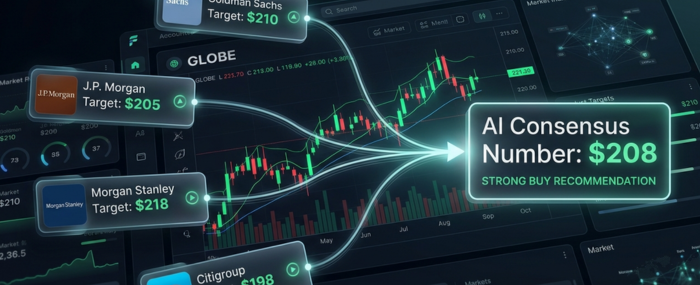


Financial analysis has always depended on a combination of data, experience, and interpretation. Today, artificial intelligence (AI)—especially machine‑learning and large language model (LLM) systems—is reshaping how financial information is processed, analyzed, and understood. But despite their growing sophistication, AI systems and human financial experts approach financial insights in fundamentally different ways. This article explores how each interprets data, what makes their methods distinct, and why modern finance increasingly relies on a combination of both.
AI’s Strength: Pattern Recognition at Scale
AI systems excel at identifying patterns in large datasets—patterns so subtle or complex that humans simply can’t detect them at the same speed or volume. Research from the University of Chicago, for example, found that advanced AI models outperform human financial analysts in forecasting certain financial outcomes, achieving roughly 60% accuracy versus humans’ 53–57% (Chussler, 2024). This advantage stems from AI’s ability to process years of financial statements, price movements, sentiment signals, and macro‑economic indicators in seconds.
Machine‑learning models used in market prediction now incorporate deep neural networks, natural language processing (NLP), and reinforcement learning to extract structure from real‑time data feeds (Rohan et al., 2026). These systems can interpret earnings reports, social‑media sentiment, and economic minutes simultaneously—tasks that would overwhelm even teams of human analysts.
In short, AI’s pattern‑recognition strength comes from:
- High‑volume data ingestion
- Mathematical correlations across thousands of variables
- Rapid adaptation to new information
- Continuous learning from updated datasets
AI does not get tired, overwhelmed, or biased by emotion—its processing is purely statistical.
Human Experts’ Strength: Context, Meaning, and Qualitative Insight
While AI thrives on vast datasets, human financial analysts excel at understanding context, especially in situations where information is ambiguous or qualitative. Analysts interpret political nuances, corporate leadership signals, regulatory environments, internal memos, and cultural shifts—factors that AI may struggle to quantify.
For instance, when analyzing semiconductor markets during periods of geopolitical tension, AI systems successfully flagged elevated supply‑chain risk—but failed to interpret the diplomatic negotiations and government subsidies that eventually reversed the market trend. Human experts were able to anticipate those developments using domain experience and qualitative reasoning (Chan, 2025).
Humans also interpret:
- Management tone during earnings calls
- Policy intentions hidden in government statements
- Market sentiment during uncertainty
- Consumer behavior shifts
- Industry‑specific dynamics not represented in raw numbers
Where AI identifies what is happening, humans tend to understand why it is happening.
How AI Processes Financial Data in Real Time
AI’s real advantage becomes clear in its ability to process real‑time data streams. Studies highlight how AI tools update predictions within seconds using continuous data from tick prices, economic indicators, or sentiment models (Chan, 2025). Modern systems integrate structured and unstructured data—news headlines, earnings transcripts, and social chatter—to maintain live forecasts.
In financial institutions, cloud‑native architectures and low‑latency AI pipelines allow for instantaneous risk scoring, fraud detection, and volatility modeling (Nagarakanti, 2025). This kind of high‑frequency updating is impossible through human‑only workflows.
AI is therefore ideal for:
- intraday trading signals
- live risk monitoring
- automated classification of financial documents
- instant outlier detection
- short‑term forecasting where speed matters
Machine‑learning approaches such as deep reinforcement learning also continuously refine predictions based on new market feedback (Rohan et al., 2026).
How Humans Interpret Data Differently
Human financial experts bring judgment—an understanding of business models, leadership psychology, regulatory behavior, and broader macroeconomic narratives. They contextualize data using lived experience and interpret signals that fall outside traditional datasets.
For example:
- Analysts can read between the lines of corporate statements.
- They understand political motivations behind monetary decisions.
- They incorporate social and cultural knowledge that AI cannot quantify.
- They use intuition formed from years of experience.
Research shows that human expertise tends to outperform AI in longer‑term forecasting, where strategic decisions, behavior, and macroeconomic cycles dominate outcomes (Chan, 2025).
Where AI and Humans Complement Each Other
Rather than replacing human analysts, AI amplifies and accelerates their capabilities. Financial institutions report improved decision‑making efficiency, faster risk assessment, and greater operational accuracy when integrating AI with human workflows (Nagarakanti, 2025).
The collaboration works because:
- AI handles data processing, anomaly detection, and pattern recognition.
- Humans provide interpretation, ethical judgment, and strategic reasoning.
- Together, they reduce errors, improve forecasting reliability, and enhance decision quality.
Modern financial systems increasingly rely on hybrid approaches: AI generates insights, while humans interpret and validate them.
A Shift Toward Human‑AI Collaboration
Research on evolving financial infrastructures shows that the future of financial analysis depends on adaptive systems that combine AI’s computational strength with human cognitive abilities (Nagarakanti, 2025). AI will continue advancing in speed, deep‑learning interpretability, and explainability, while humans will focus on meaning, narrative, and high‑context decision‑making.
The optimal financial insight emerges when:
- AI surfaces the patterns
- Humans explore the implications
- Both refine decisions together
This combined model is already reshaping how financial services evaluate risk, analyze markets, and manage portfolios.
Conclusion
AI and human financial experts interpret data in fundamentally different—but highly complementary—ways. AI excels at pattern recognition, real‑time analysis, and processing massive datasets with precision. Humans excel at contextual interpretation, qualitative reasoning, and understanding motivations behind market behavior.
The financial world of the future won’t be dominated by AI or humans alone—it will be shaped by how well both sides work together. As research continues to show, the strongest insights come from systems where each does what they do best.
References
Chan, K. (2025). AI vs human analysts: Who predicts stock trends better? Bika.ai. https://bika.ai/blog/ai-vs-human-analysts-who-predicts-stock-trends-better [bika.ai]
Chussler, J. (2024). AI is better at financial analysis than humans, study finds. Money.com. https://money.com/ai-vs-human-financial-analysts/ [money.com]
Nagarakanti, R. C. (2025). Human‑AI collaboration in financial services: Augmenting decision‑making with cloud‑native intelligence. European Journal of Computer Science and Information Technology, 13(22), 23–41. https://eajournals.org/ejcsit/wp-content/uploads/sites/21/2025/05/Human-AI-Collaboration.pdf [eajournals.org]
Rohan, A., Hossen, M. D., Pranto, M. N., Hossain, B., Areyfin, M., & Islam, R. (2026). Artificial intelligence in financial market prediction. Frontiers in Artificial Intelligence. https://www.frontiersin.org/journals/artificial-intelligence/articles/10.3389/frai.2025.1696423/full