
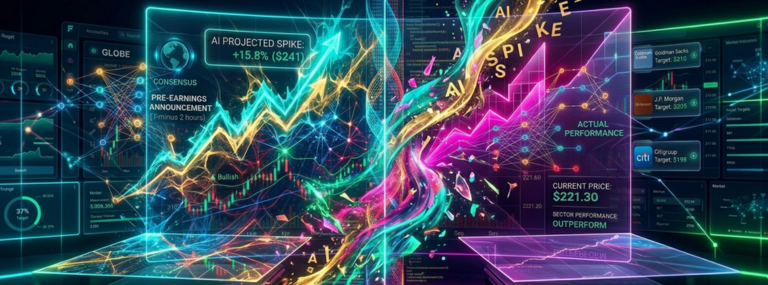
Tired of nasty earning surprises? Picture this: You’re holding shares of a solid company heading into earnings. Analysts expect $1.20 per share, the stock’s been trading sideways for weeks, and you’re wondering whether to hold through the report or take profits. Then boom—the company reports $1.45, and the stock jumps 12% in after-hours trading.
Wouldn’t it be nice to see that coming?
This is the question driving one of the most fascinating developments in financial technology: using artificial intelligence to predict earnings surprises before they happen. And the short answer is yes, AI can forecast better-than-expected results—but how it works might surprise you.
The Traditional Approach to Earnings Predictions
Wall Street analysts spend their careers building financial models and industry expertise to forecast quarterly earnings. They talk to management, analyze historical trends, monitor competitors, and crunch endless spreadsheets. Their consensus estimates become the benchmark that moves markets.
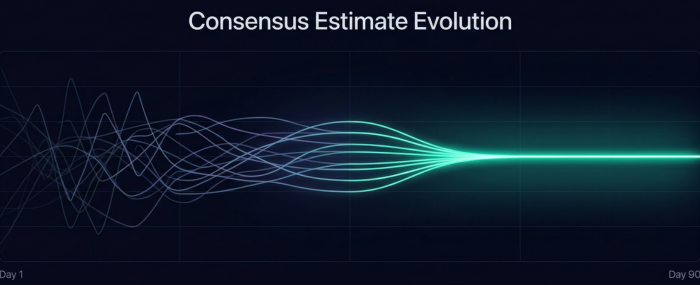
But here’s the uncomfortable truth: analyst estimates are often wrong. Not slightly off—sometimes dramatically wrong. Companies regularly beat or miss expectations by 20%, 30%, even 50% or more.
Why? Because traditional analysis has blind spots. Analysts rely heavily on guidance from company management (who have reasons to sandbag expectations), historical patterns (which don’t account for sudden shifts), and industry knowledge (which can miss cross-sector trends). They’re also tracking dozens of companies simultaneously, limiting how deep they can dig on any single name.
How AI Changes the Earnings Game
Artificial intelligence approaches earnings prediction from a completely different angle. Instead of building financial models from the top down, AI systems process thousands of data points that humans simply can’t track at scale.
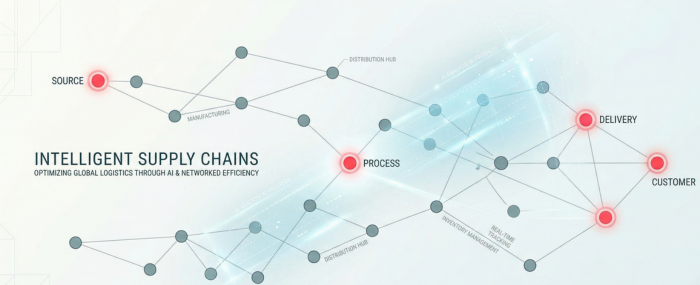
These systems analyze everything from credit card transaction data showing consumer spending trends, to satellite images of retailer parking lots, to natural language processing of executive tone during conference calls. They detect patterns in supply chain data, monitor social media sentiment, track employee reviews, and measure web traffic changes.
WealthNX AI goes further by integrating alternative data with traditional financial metrics to spot discrepancies between market expectations and emerging reality. When alternative data suggests strengthening fundamentals while analyst estimates remain flat, that gap represents opportunity.
The platform’s algorithms don’t just predict whether earnings will beat—they identify why a surprise might happen and how significant it could be. That context matters enormously when deciding how to position your portfolio.
The Data Sources That Make It Possible
What exactly is AI looking at that human analysts miss? The scope is actually pretty mind-blowing.
For retailers, AI tracks credit card spending data showing real-time sales trends weeks before earnings. If Visa and Mastercard data shows accelerating same-store sales while analysts expect flat growth, that’s a signal.
For software companies, AI monitors app download trends, usage metrics, customer review sentiment, and job postings for customer success managers (which indicate growing customer bases). When a SaaS company is hiring aggressively and user engagement is climbing, earnings surprises often follow.
For manufacturers, AI analyzes shipping data, commodity prices, freight volumes, and supplier relationships. A sudden increase in component orders or expedited shipping suggests stronger demand than the market expects.
Satellite imagery has become particularly powerful. AI can count cars in Costco parking lots, measure inventory levels at shipping ports, or track construction progress at semiconductor fabs—all objective data points that preview earnings before official reports.
The Track Record: Does It Actually Work?
Here’s where things get interesting. Academic studies and real-world applications show AI-powered earnings prediction significantly outperforms traditional analyst consensus in identifying surprises.
One major reason is timeliness. Alternative data updates daily or even hourly, while analyst estimates change maybe once or twice per quarter. By the time analysts revise estimates based on new information, AI systems have already detected the trend and adjusted predictions.
Another advantage is objectivity. AI doesn’t suffer from anchoring bias (over-relying on previous estimates), doesn’t worry about maintaining relationships with company management, and doesn’t care about looking wrong. The algorithms just follow the data wherever it leads.
WealthNX AI leverages these advantages by continuously updating earnings surprise probabilities based on incoming alternative data. Instead of a static prediction weeks before earnings, investors get dynamic forecasts that evolve as new information emerges.
What AI Sees That Humans Miss
The human brain isn’t wired to process hundreds of variables simultaneously and detect subtle correlations. AI excels at exactly this type of pattern recognition.
For example, AI might notice that when a particular supplier’s stock rises, it predicts strength for three specific customers two quarters later. Or that certain combinations of social media sentiment and web traffic changes reliably forecast earnings beats for consumer brands. Or that specific language patterns in 10-Q filings correlate with upcoming surprises.
These relationships aren’t obvious even to experienced analysts, but they’re statistically significant across thousands of earnings reports. AI systems learn these patterns and apply them in real-time.
The platform can also detect when multiple independent signals align. Maybe credit card data, job postings, app downloads, and supplier orders all point to the same conclusion. That convergence of evidence carries much more predictive power than any single indicator.
The Limitations You Should Know
Before you think AI has cracked the code entirely, let’s be honest about the limitations. AI predictions aren’t perfect, and they never will be.
Black swan events—pandemic lockdowns, sudden regulatory changes, unexpected executive departures—can’t be predicted from historical patterns. AI also struggles with companies that lack alternative data sources or operate in industries where data collection is sparse.
Quality of predictions varies by company size and sector. Large-cap retailers with rich alternative data tend to have more accurate predictions than small-cap biotech companies awaiting FDA decisions.
There’s also the challenge of market efficiency. As more investors use AI-powered predictions, the edge diminishes somewhat. The stocks with the clearest positive signals get bid up before earnings, reducing potential gains. This is why platforms like WealthNX AI focus on identifying opportunities early, before they become consensus views.
Beyond Just Beat or Miss
The most sophisticated AI systems don’t just predict whether earnings will beat expectations—they forecast the magnitude of surprises and market reactions.
A 2% earnings beat might not move the stock if the company guides poorly for next quarter. A 1% miss might actually send shares higher if underlying trends exceeded worst-case fears. AI that models not just the earnings number but the likely market interpretation adds another layer of value.
WealthNX AI analyzes historical reactions to different types of surprises, helping investors understand not just what might happen with earnings, but how the market typically responds. That distinction matters enormously for trading around earnings events.
Combining AI Predictions with Your Strategy
The smartest approach isn’t blindly following AI predictions—it’s integrating them into a broader investment process. When AI signals a likely earnings beat, that’s your cue to dig deeper. What’s driving the predicted surprise? Is it sustainable? How is the stock currently positioned?
Maybe AI predicts a strong quarter, but the stock has already run up 30% in anticipation. That’s a very different setup than a prediction of strength while shares trade near 52-week lows with bearish sentiment.
The opportunity lies in identifying disconnects between what AI forecasts and what the market prices in. When alternative data screams strength but the stock remains unloved, that asymmetry creates opportunity.
The Future of Earnings Prediction
This technology is still evolving rapidly. AI models improve as they ingest more data and learn from more earnings cycles. New alternative data sources emerge constantly—from IoT sensors to blockchain transaction data to real-time labor market information.
The platforms that will win aren’t just those with the most data, but those that synthesize diverse sources most effectively. It’s not about having satellite imagery alone, but combining it with credit card data, sentiment analysis, and traditional financials to build comprehensive predictions.
WealthNX AI represents this integrated approach, using advanced algorithms to connect dots across data sources that would take human analysts weeks to compile. The result is earnings surprise predictions that help investors position ahead of market-moving events rather than reacting after the fact.
Real-World Application
Let’s get practical. How would you actually use AI earnings predictions?
Say you’re tracking a regional bank heading into earnings. Traditional analyst consensus expects $0.95 per share. But WealthNX AI shows alternative data suggesting stronger loan growth, improving credit quality metrics, and increasing deposit flows—pointing toward a likely beat in the $1.05-1.10 range.
Meanwhile, the stock trades flat with neutral sentiment. Options pricing suggests the market expects minimal post-earnings movement. This setup—AI predicting strength while the market prices in mediocrity—is where opportunities live.
You’re not gambling on a binary outcome. You’re making an informed decision based on data-driven analysis that the broader market hasn’t fully incorporated yet.
FAQ
How far in advance can AI predict earnings surprises?
Most AI systems perform best in the 2-4 weeks before earnings as alternative data becomes more predictive. Some signals emerge earlier, but prediction accuracy generally improves as the earnings date approaches and more data becomes available.
What’s the typical accuracy rate for AI earnings predictions?
Performance varies by company and sector, but advanced AI systems correctly predict the direction of earnings surprises (beat vs. miss) 60-70% of the time—significantly better than the roughly 50% you’d expect from chance and generally outperforming consensus analyst estimates.
Do earnings surprise predictions work for all stocks?
AI predictions are most reliable for companies with rich alternative data sources—typically larger consumer-facing businesses, retailers, tech companies with measurable user metrics, and industrial firms with trackable supply chains. Predictions are less accurate for small-caps with limited data, biotech awaiting binary events, or companies in sectors with sparse alternative data.
Can AI predict how much a stock will move after an earnings surprise?
Advanced AI systems can forecast likely stock reactions by analyzing historical responses to similar surprise magnitudes, current positioning, sentiment, and technical factors. However, market reactions depend on many variables including guidance, macro conditions, and overall market sentiment—making price movement predictions less reliable than earnings predictions themselves.
How does WealthNX AI deliver earnings surprise predictions?
WealthNX AI continuously monitors alternative data sources and updates earnings surprise probabilities dynamically. The platform integrates these predictions with other signals like analyst revisions, institutional activity, and technical patterns to identify the most compelling opportunities before earnings events.
Is using AI for earnings predictions considered insider trading?
No. AI predictions based on publicly available alternative data, satellite imagery, aggregated credit card data, web traffic, and other legally accessible sources are completely legal. These systems don’t rely on material non-public information—they simply process public data more comprehensively than traditional analysis.